We’re pleased to present this case study at a Belgian waffle manufacturer founded over thirty years ago. They produce various types of waffles, including classic vanilla waffles, chocolate waffles, and waffles with no added sugar. A few years ago, they moved to a new location to transition to fully automated production. The only step still performed manually was the weekly cleaning of the waffle irons.
At the waffle factory, the baking takes place in tunnel ovens with a double row of baking irons: a bottom layer and a top layer. The bottom irons are not connected to the top row, and the number of irons in each layer is also not the same. The baking is done with various types of coatings and fats, depending on the recipe being followed.
These different types of recipes and coatings make cleaning a huge challenge as the contamination always varies depending on the time elapsed since the previous cleaning, the recipe, the coating, the oven temperature, etc.
Twenty years ago, the oven was burned out for cleaning, but this was abandoned for safety reasons. At that point, the company switched to cleaning with water under very high pressure (500 bar), sprayed onto the waffle irons through a row of jets. This solution involves rolling a mobile structure in front of the oven, and the waffle irons slowly rotate past while the water sprays from the nozzles. Cleaning the oven this way took four hours. However, the oven also had to be completely cooled down to prevent the entire factory from filling with steam, which can easily take six hours. Then the cleaning began, which also took several hours because the entire space was flooded with a mixture of water and loose baking residue that stuck to the floor. The result itself was not always satisfactory, as thick layers of coating were not completely removed even under this high water pressure, resulting in additional manual work.
So the waffle manufacturer went looking for a new cleaning method that:
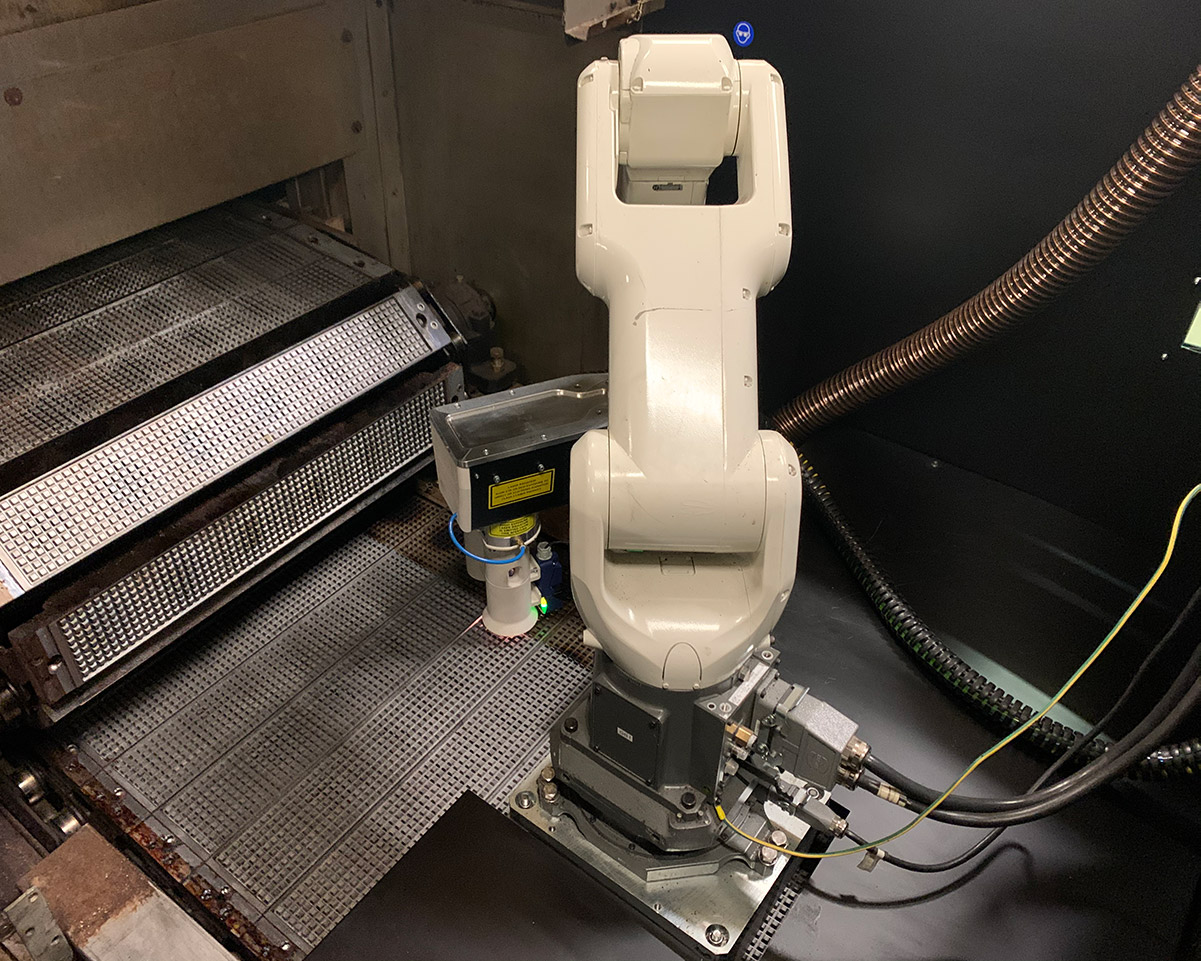
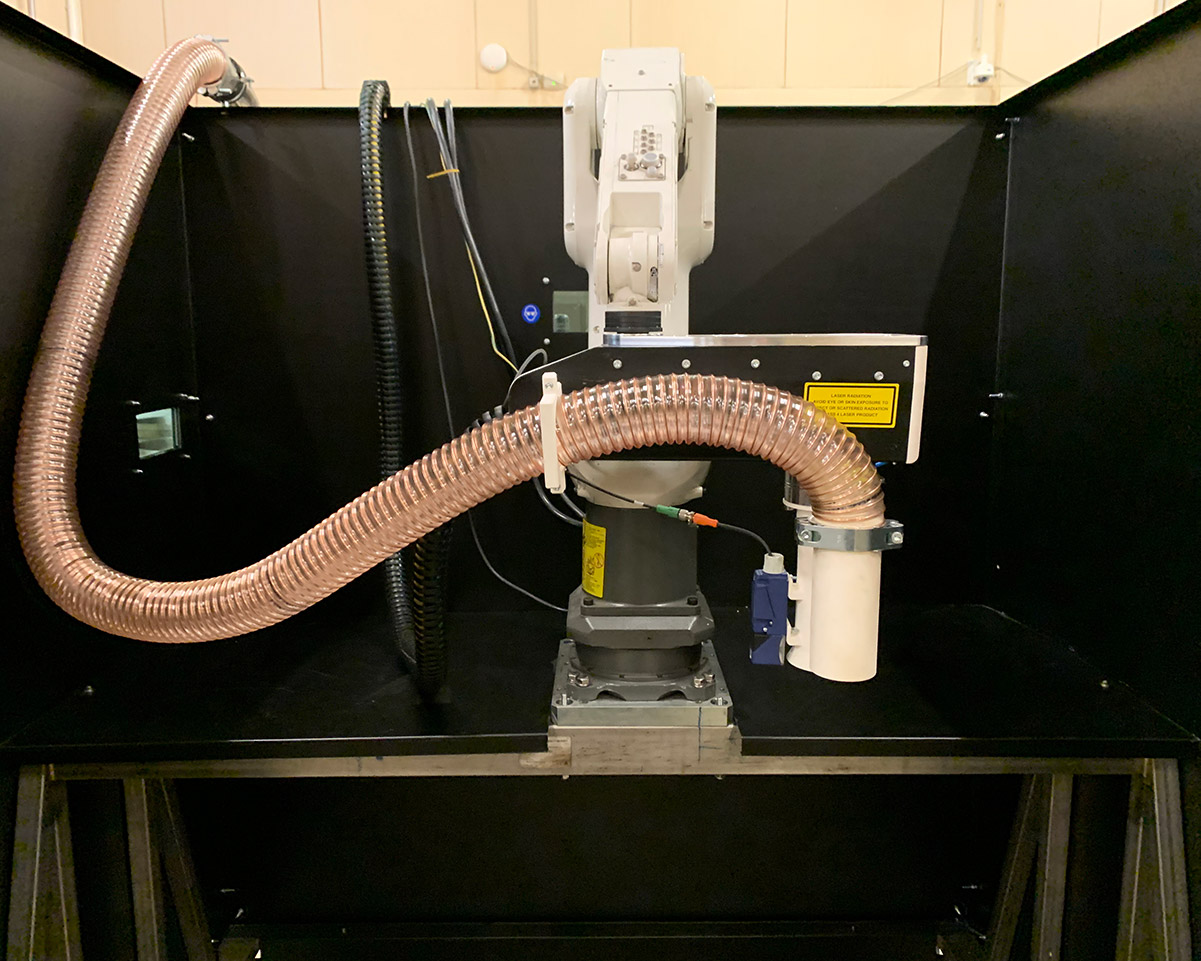
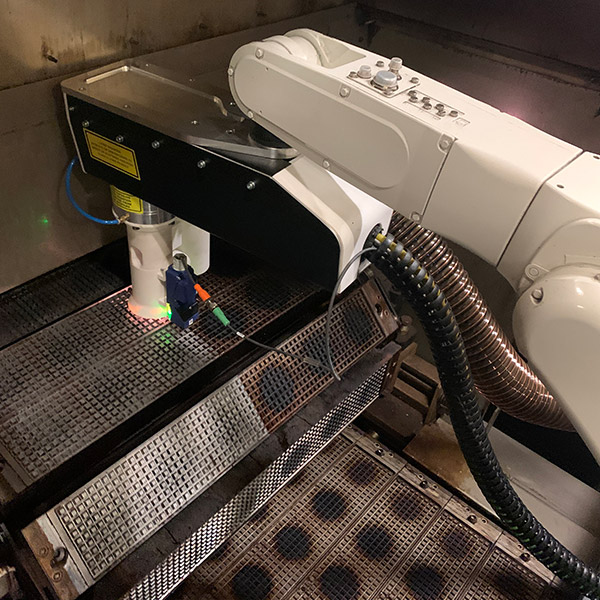
In consultation with the wafer manufacturer, Laserflux built a laser cleaning system that meets all the above requirements. The laser head is operated by a programmed robot that can perform various cleaning types: quick, normal, and very thorough.
The laser beam itself is supplied by a 10,000W (10,000W CW) laser source which, through the correct adjustment of the laser, optics, and scan pattern, removes all dirt and old coating without damaging the blades. The chassis includes the necessary anchor points so that the machine can always be positioned correctly.
The entire unit is easily movable, and a special cage has been built around the frame, conforming to the laser guidelines. The walls of the shield slide completely over the oven, completely obscuring any view inside. Visual inspection is performed via a camera or one of the special inspection windows. The loosened dirt falls onto the irons and is immediately extracted, along with the grease fumes, by a HEPA-filtered extractor.
Operation is via a touch panel with a very simple menu. This menu is designed so that anyone in the factory can move and start up the system after a brief explanation.
The installation took three months to build and one month to commission. The machine has now been running for several months and has delivered the following results:
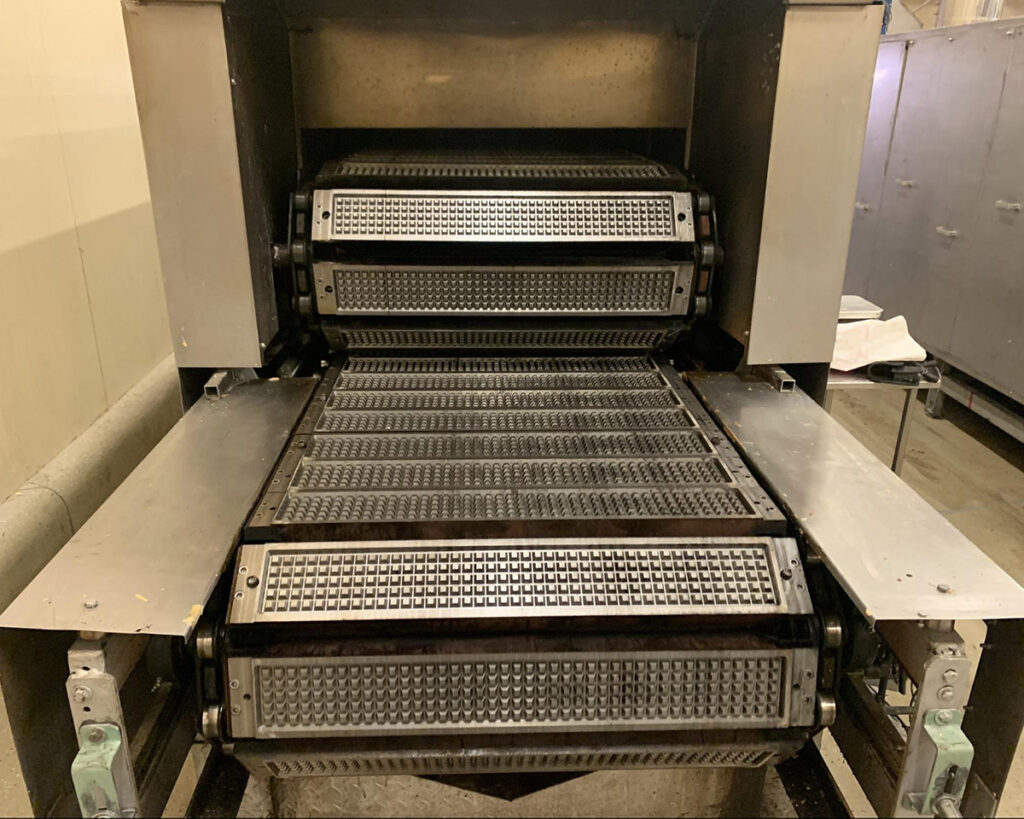
Because the system is silent in use and doesn’t blow dirt around, cleaning can take place while the other production lines are running. The ovens are now cleaned continuously, so a quick clean is usually enough to get the irons clean again. Laser cleaning also works on hot ovens, eliminating the need for cooling time. A small oven is available after about 3 hours, whereas previously this could easily take 12 hours, including cooling time, cleaning time, and subsequent cleanup. The waffle irons are considerably cleaner than before. This allows for longer baking periods before cleaning, if desired. This provides greater flexibility in the bakery’s scheduling. The photo below shows an oven after cleaning.
Interested? More information? Want a demo? Want an offer?
Questions? Contact us.